2026-03-25 11:33:20
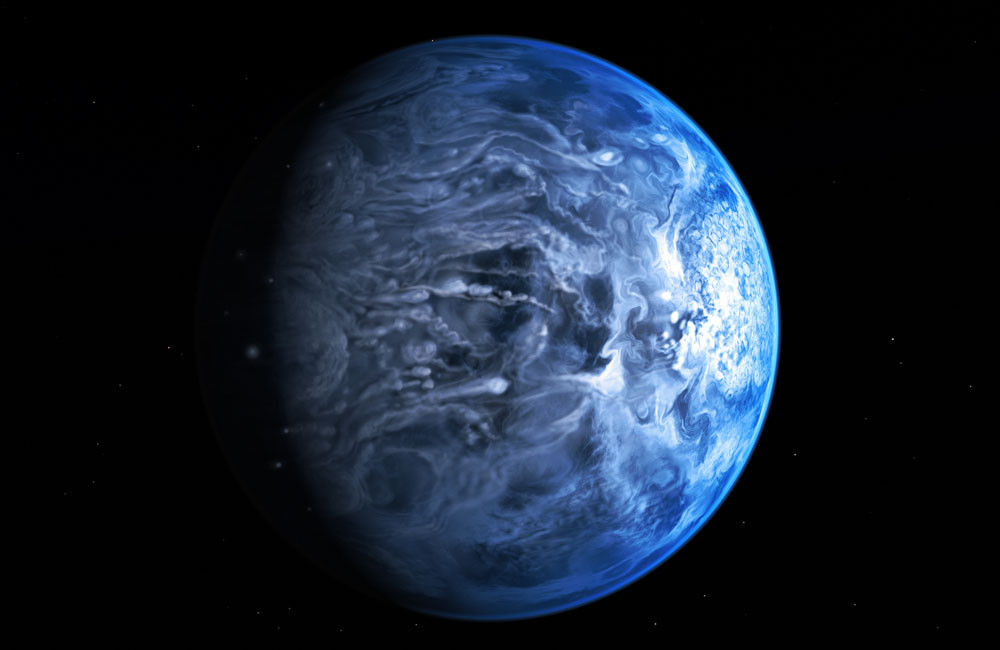
Astronomers have identified 45 planets that could offer the strongest chances yet of supporting alien life.
After analysing more than 6,000 known worlds beyond our solar system, a study has been published by Cornell University on so-called exoplanets – those that orbit stars other than the Sun – which have conditions that may allow for water and potentially life.
The research focused on rocky planets that sit within a habitable range of their stars, often referred to as the “Goldilocks zone”, where temperatures are neither too hot nor too cold for liquid water to exist.
Some of the selected planets are also believed to exhibit weather systems, including cloud cover, humidity and wind patterns.
Among the 45 identified candidates is Proxima Centauri b, an Earth-sized planet orbiting the closest star to the Sun, approximately 4.2 light years away.
Abigail Bohl, co-author of the study, said: “We know Earth is habitable, while Venus and Mars are not. We can use our solar system as a reference to search for exoplanets that receive stellar energy between what Venus and Mars get.”
The planets are located within systems such as TRAPPIST, where conditions may allow for stable climates and atmospheres.
Scientists say for life to exist as it is currently understood, planets would need not only liquid water but also a suitable chemical balance and long-term environmental stability.
Proxima Centauri b, one of the most closely studied candidates, lies more than 24 trillion miles from Earth.
At that distance, even the fastest spacecraft to leave the solar system, Voyager 1, would take approximately 75,000 years to reach it, highlighting the limits of current space travel.
Instead, astronomers rely on advanced telescopes to study these distant worlds, using indirect observations to determine atmospheric composition, temperature ranges and potential habitability.
The comparison with planets within our own solar system – including Venus and Mars – allows researchers to establish benchmarks for identifying which exoplanets may be capable of supporting life.
The findings build on ongoing efforts within astronomy to refine the search for habitable planets, focusing on those that share key characteristics with Earth while avoiding the extreme conditions observed on neighbouring planets.
Visit Bang Bizarre (main website)