2026-06-05 14:04:22
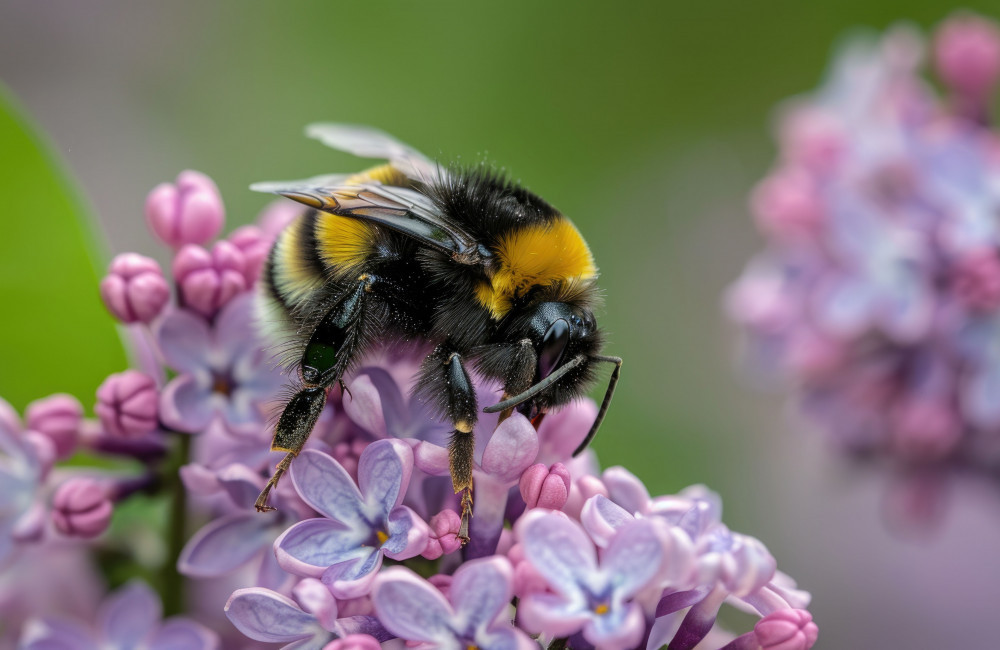
Bumble bees have been crowned the brainboxes of the insect world after scientists discovered they can solve complex puzzles without any training.
The remarkable findings suggest the tiny pollinators possess far more sophisticated intelligence than previously thought, despite having brains smaller than a grain of rice.
Researchers in Finland found bumble bees could complete a series of novel object-manipulation tasks by spontaneously working out solutions they had never encountered before.
The study, published in the journal Science, challenges the long-standing belief that insight and spontaneous problem-solving are restricted to humans and other large-brained vertebrates.
Scientists compared the behaviour to a famous experiment conducted more than a century ago in which chimpanzees stacked boxes to reach a banana hanging out of reach.
In the bee version, insects first learned that a blue artificial flower contained a reward.
During testing, the flower was moved to the ceiling of a transparent arena where it could not be reached.
To claim the prize, the bees had to move a small ball beneath the flower and climb on top of it, a sequence they had never been taught.
Study senior author Dr Olli Loukola said: “This is essentially an insect version of the classic ‘box-and-banana’ problem.
“The animal must realise that an object can be repositioned and then used as a tool to reach an otherwise inaccessible goal.
“What stands out about the result is that this kind of spontaneous problem-solving is now demonstrated in an insect.”
Lead author Akshaye Bhambore added: “What makes this behaviour especially remarkable is that the bees had never been trained to roll the ball.
“This was a completely new challenge.
“Their behaviour appeared goal-directed with successful individuals showing more directed movement patterns.”
Researchers designed strict control experiments to rule out luck, trial-and-error learning and simple visual cues.
Even when the flower was hidden from view while the bees moved the ball, many still successfully completed the task.
Bhambore said: “By analysing the bees’ behaviour across unusually stringent control experiments, we could show that they were not simply reacting to visual stimuli or moving the ball randomly.”
Dr Loukola stressed the findings do not mean bees think like humans.
He said: “We are not claiming that bees think like humans.
“But our findings show that miniature brains can generate flexible solutions to novel problems in ways we are only beginning to understand.”
Visit Bang Bizarre (main website)