2026-03-24 11:01:24
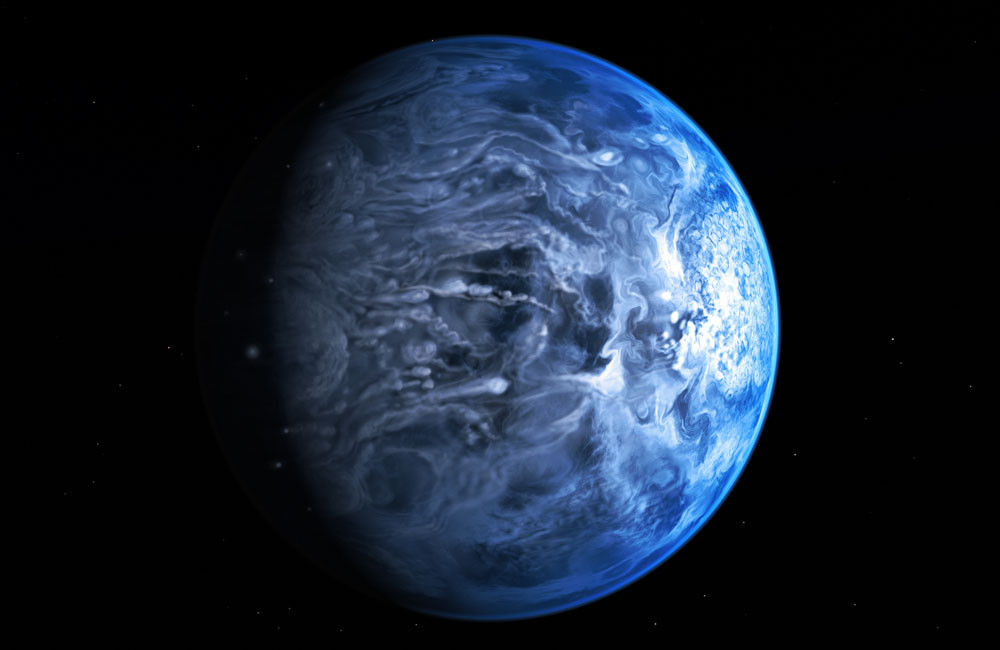
Astronomers say they have found a distant ‘Super Earth’ with a thick atmosphere and extreme heat.
Nicole Wallack, a postdoctoral fellow at Carnegie Science, explained the findings after renewed analysis of TOI-561 b, an ancient exoplanet located about 560 light-years from Earth.
First identified in 2021 by NASA’s Transiting Exoplanet Survey Satellite, or TESS, the planet has since been studied using data from the James Webb space telescope.
Scientists say the orb reaches surface temperatures of around 1,800C and completes a full orbit of its star in just under 11 hours, classifying it as an ultra-short-period planet.
One side remains in permanent daylight, while the other is kept warm through atmospheric heat circulation.
Despite these conditions, observations suggest the presence of an atmosphere potentially containing water, oxygen and carbon dioxide – a finding that challenges previous assumptions about how such planets form and evolve.
Nicole told Science Daily: “Based on what we know about other systems, astronomers would have predicted that a planet like this is too small and hot to retain its own atmosphere for long after formation.”
She added: “But our observations suggest it is surrounded by a relatively thick blanket of gas, upending conventional wisdom about ultra-short-period planets.”
Tim Lichtenberg from the University of Groningen described the planet’s surface as dominated by molten rock interacting with its atmosphere.
He said: “We think there is an equilibrium between the magma ocean and the atmosphere.
“At the same time that gases are coming out of the planet to feed the atmosphere, the magma ocean is sucking them back into the interior.”
The so-called Super Earth is thought to be about 10 billion years old, orbiting a star estimated to be roughly twice the age of the Sun.
Researchers say its existence suggests rocky planets were forming much earlier in the universe’s history than previously understood.
The James Webb space telescope – a joint project between NASA, the European Space Agency and the Canadian Space Agency – has been central to the discovery.
Positioned about one million miles from Earth, the observatory has been used to study some of the earliest galaxies in the universe, as well as distant exoplanets such as TOI-561 b.
The findings add to growing evidence that planetary systems can behave in ways that challenge established models, particularly in extreme environments where heat, pressure and atmospheric dynamics interact in unexpected ways.
Visit Bang Bizarre (main website)