2026-05-01 09:03:34
Humanity could face extinction within decades due to the threats of nuclear war and artificial intelligence, a Nobel Prize-winning theoretical physicist has warned.
David Gross, 85, who shared the 2004 Nobel honour in physics with Frank Wilczek and Hugh David Politzer for their work on asymptotic freedom, made the remarks in a recent interview while reflecting on the future of physics and global stability. The scientist – who has also been awarded the $3 million Breakthrough Prize in Fundamental Physics – was asked whether a “unified theory” of physics might be achieved within 50 years.
His response focused instead on the likelihood humanity itself may not endure that long, citing nuclear proliferation, geopolitical instability and rapid advances in AI.
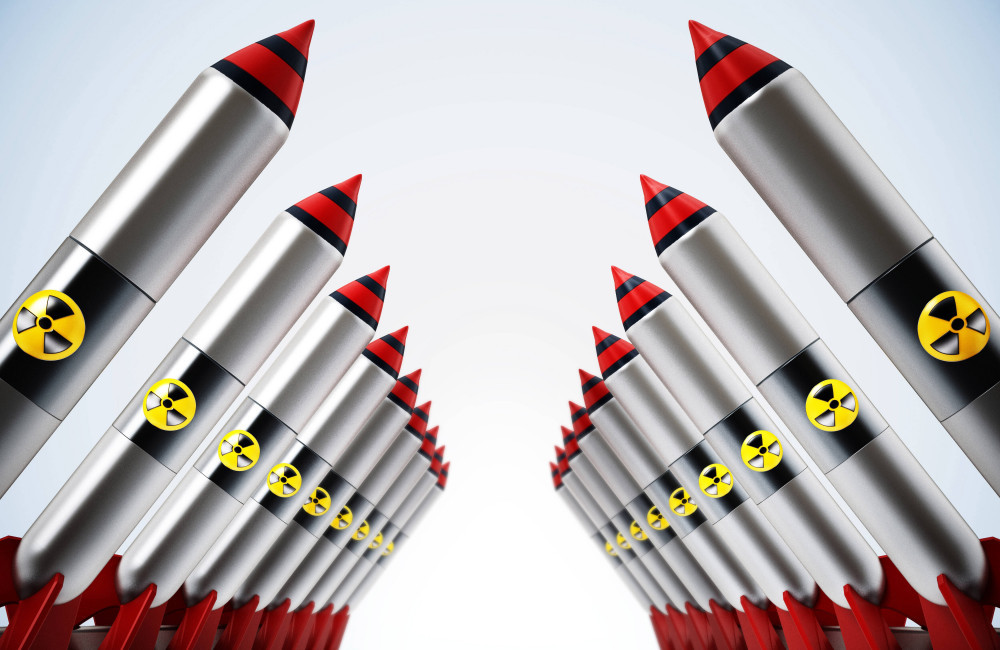
Gross told LiveScience: “Currently, I spend part of my time trying to tell people… that the chances of you living 50 (more) years are very small. Due to the danger of nuclear war, you have about 35 years.”
He described the estimate as “crude”, but suggested the probability of catastrophic conflict has worsened significantly since the end of the Cold War.
Gross added: “Even after the Cold War ended, (when) we had strategic arms control treaties, all of which have disappeared, there were estimates there was a 1 per cent chance of nuclear war (each year.)
“Things have gotten so much worse in the last 30 years, as you can see every time you read the newspaper. I feel it’s not a rigorous estimate, that the chances are more likely two per cent. So that’s a one-in-50 chance every year.”
He continued: “The expected lifetime, in the case of two per cent (per year), is about 35 years.”
Gross pointed to a global landscape shaped by nine nuclear-armed states and what he described as three “super nuclear powers”, arguing the collapse of arms control agreements has created a more volatile and unpredictable environment.
He referenced ongoing conflicts and tensions, including the war between Russia and Ukraine, as well as geopolitical strains involving the United States, Israel and Iran, alongside longstanding tensions between India and Pakistan.
Gross also warned emerging technologies could intensify the risks.
He said systems driven by artificial intelligence may increasingly be integrated into military decision-making processes, raising concerns about speed, reliability and control.
Gross also warned in scenarios where leaders have limited time to respond to perceived threats, there could be pressure to delegate decisions to automated systems.
He cautioned artificial intelligence can “hallucinate” and produce unreliable outputs, suggesting reliance on such systems in high-stakes environments could introduce new dangers rather than mitigate them.
He also stressed the importance of renewed international dialogue and cooperation to reduce risks to humanity, raising the alarm the erosion of global norms and agreements has left the world more exposed to catastrophic outcomes.
Visit Bang Bizarre (main website)