2026-05-15 12:03:34
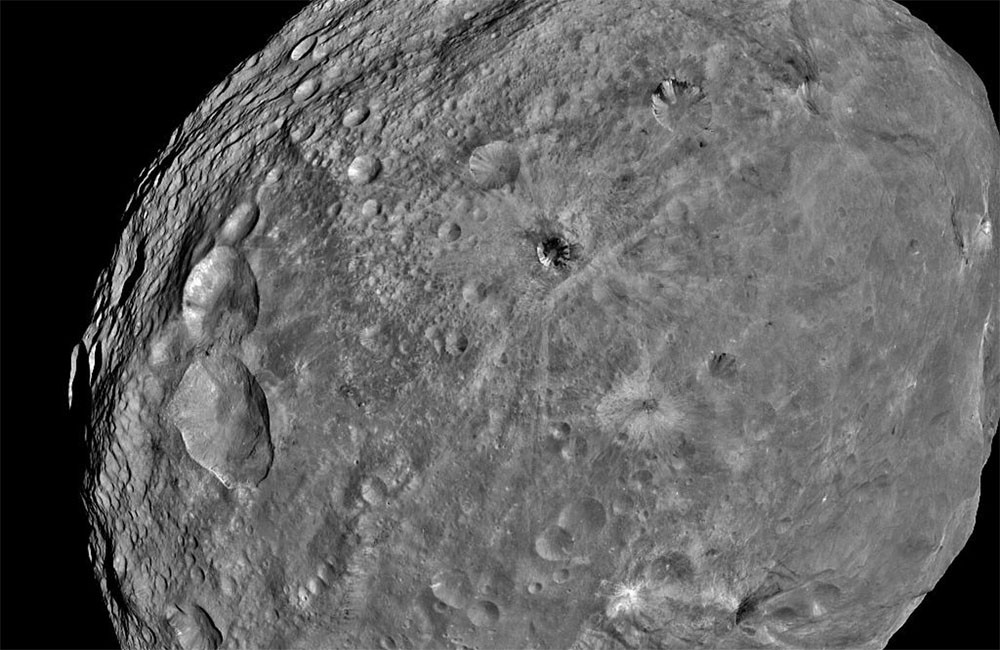
A giant asteroid which could wipe out an entire city will narrowly avoid colliding with the Earth on Monday (18.06.26) .
The huge space rock – which has been named 2026JH2 and is said to be four times the size of a London bus – was spotted by experts this week who have predicted it will fly past the planet at a distance of around 6,000 miles (90,000km) late on Monday night.
Mark Norris of the University of Lancashire told New Scientist: “In astronomical terms, it’s as close as you can get without hitting.”
He added the asteroid would easily destroy a whole city if it impacted, saying: “It’s the kind of thing that would ruin a city quite efficiently, if it hit.”
The asteroid was first spotted by scientists at the Mount Lemmon Survey in Arizona and the Farpoint Observatory in Kansas on May 13.
It will be visible to observers in the northern hemisphere very briefly on Monday but its high speed means it will be difficult to spot.
The space rock is believed to be between 52 and 115 feet long but its size is an estimate using the amount of light bouncing off its surface to work out its mass.
The publication reports that if an asteroid the size of 2026JH2 hit the Earth its impact would be comparable to the Chelyabinsk meteor strike in Russia in 2013.
The Chelyabinsk meteor was said to be 59ft and it exploded 28 miles (45km) above the ground with only around 0.05 per cent of the rock actually making an immpact.
Around 1,500 people were injured and more than 3,600 homes were damaged by the blast.
News of 2026JH2’s near-miss comes after NASA chiefs warned Earth is currently powerless to stop thousands of “city killer” asteroids hurtling through space near our planet.
Experts estimate there are around 15,000 medium-sized space rocks still undetected and potentially within striking distance of Earth.
A 2022 mission known as Dart proved that, in theory, humanity could knock a dangerous asteroid off course using a spacecraft.
But scientists say there is no ready-to-launch defence system in place if a real threat emerged tomorrow.
Dart mission chief Dr Nancy Chabot, from Johns Hopkins University in Maryland, said: “We worry about these city killer asteroids.
“Dart was a great demonstration but we don’t have that sitting around ready to go if there was a threat we needed to use it for.
“We don’t know where 50 per cent of the 140-metre asteroids are, which is a concern.
“We would not have any way to go and actively deflect one right now.
“We could be prepared but I don’t see that investment being made.”
Speaking at the American Association for the Advancement of Science conference in Arizona, NASA’s Planetary Defense Officer Dr Kelly Fast admitted the unknown objects are the most alarming.
She said: “What keeps me up at night is the asteroids we don’t know about.
“Small stuff is hitting us all the time so we’re not so much worried about that. And we’re not so worried about the large ones from the movies because we know where they are.
“It’s the ones in between, about 140 metres and larger, that could really do regional rather than global damage and we don’t know where they are.
“It’s estimated there are about 25,000 of those and we’re only about 40 per cent of the way through.
“It takes time to find them, even with the best telescopes.”
NASA plans to launch a new mission, Surveyor, in 2027, aiming to detect at least 90 per cent of asteroids wider than 140 metres within 10 years. Until then, experts say Earth remains largely exposed.
Visit Bang Bizarre (main website)